Peptides are structurally delicate molecules. Unlike small-molecule drugs, they can degrade through heat, moisture, light, repeated freeze-thaw cycles, and even physical agitation — none of which are visible until you've already compromised your research. Proper storage isn't optional. It's the difference between a vial that delivers accurate results and one that delivers unreliable data.
Understanding Why Peptides Degrade
Peptide degradation follows several pathways depending on the environment:
- Hydrolysis — water molecules cleave peptide bonds, breaking the chain into fragments. This is accelerated by heat and acidic or alkaline conditions.
- Oxidation — oxygen attacks susceptible residues like methionine, cysteine, and tryptophan, permanently altering the structure.
- Aggregation — peptides clump together into insoluble masses, particularly in warm or agitated conditions, reducing bioavailability.
- Deamidation — asparagine and glutamine residues spontaneously convert, altering the charge and activity of the molecule.
The lyophilisation (freeze-drying) process is specifically designed to remove water and dramatically slow these pathways. This is why all high-quality research peptides arrive as white or off-white lyophilised powder, not as pre-dissolved solutions.
Storing Lyophilised (Freeze-Dried) Peptides
Lyophilised peptides are significantly more stable than reconstituted ones, but they are not immune to degradation. The goal is to minimise heat, moisture, and light exposure while keeping the vial sealed.
Short-Term Storage (Up to 3 Months)
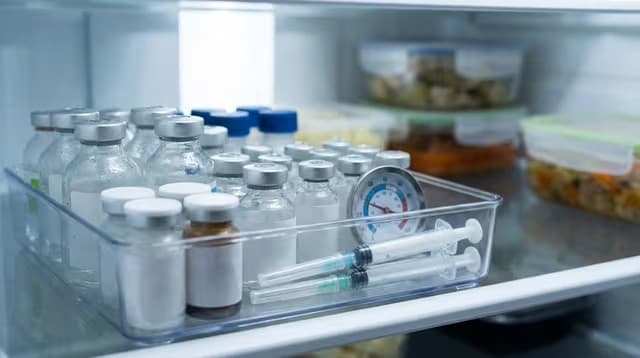
Lyophilised peptides can be stored at standard refrigerator temperature (2–8°C) for up to 2–3 months without significant potency loss in most cases. Keep the vials in their original packaging or in a dedicated container away from the refrigerator door, which experiences the most temperature fluctuation.
Long-Term Storage (3 Months to 2+ Years)
For long-term storage, freezer storage at −20°C is recommended for most peptides. At this temperature, lyophilised peptides can remain stable for 12–24 months or longer. For peptides with particularly sensitive residues (cysteine-containing sequences, for example), storage at −80°C provides additional protection, though this is rarely necessary for standard research peptides under normal timelines.
Key Rules for Lyophilised Storage
- Keep vials sealed until use. The rubber stopper and aluminium crimp form an airtight seal. Do not remove the cap until you are ready to reconstitute.
- Minimise freeze-thaw cycles. Each time a frozen vial warms and re-cools, condensation can form inside, introducing moisture. If you plan to store long-term, freeze the vials and leave them frozen until you need them.
- Protect from light. UV light can break down sensitive residues. Store vials in a dark container, drawer, or opaque bag — especially if your freezer has an internal light that activates on opening.
- Allow vials to warm before opening. When removing a lyophilised vial from the freezer, let it warm to room temperature before opening or reconstituting. This prevents condensation from forming on the powder itself.
- Store upright. Keeping vials upright reduces the surface area of powder exposed to any trace gases under the crimp seal.
Reconstituting Peptides
Reconstitution is the process of dissolving lyophilised peptide powder into a liquid carrier — most commonly bacteriostatic water (BAC water). Bacteriostatic water contains 0.9% benzyl alcohol, which inhibits microbial growth and allows the reconstituted solution to remain stable for use over several weeks.
What to Use for Reconstitution
- Bacteriostatic water (BAC water) — the standard choice for most peptides. Suitable for all common research peptides and provides multi-dose stability.
- Sterile water for injection — acceptable, but contains no preservative. Reconstituted vials should be used within 24 hours or treated as single-use.
- Dilute acetic acid (0.1%–1%) — sometimes required for hydrophobic or poorly soluble peptides (e.g., BPC-157, TB-500) to aid dissolution. Use only when recommended for the specific peptide.
- Avoid tap water or distilled water — neither is sterile, and both introduce contamination risk.
Reconstitution Technique
Inject BAC water slowly down the side of the vial — not directly onto the powder. Forcing liquid onto the dry peptide can mechanically disrupt the structure. Once the water is added, gently swirl the vial in a slow circular motion. Never vortex or shake a peptide vial — agitation promotes aggregation and can denature the peptide. Allow a minute or two for complete dissolution; a clear solution indicates full reconstitution.
Storing Reconstituted Peptides
Once reconstituted, peptide stability decreases significantly. The aqueous environment introduces all the degradation pathways that lyophilisation was protecting against.
Temperature
Reconstituted peptides should be stored in the refrigerator at 2–8°C immediately after preparation. Do not leave a reconstituted vial at room temperature for extended periods. Even a few hours at room temperature will accelerate degradation, particularly for sensitive sequences.
Do not freeze a reconstituted peptide solution unless you have no choice. Freezing a liquid causes ice crystal formation, which physically damages the peptide structure and can cause aggregation on thawing. If you must freeze, use a −20°C freezer, limit to a single freeze-thaw, and accept some reduction in potency.
Shelf Life After Reconstitution
- Reconstituted in BAC water, stored at 2–8°C: typically stable for 4–6 weeks for most peptides, though this varies by sequence and concentration.
- Reconstituted in sterile water, stored at 2–8°C: treat as single-use or use within 24 hours.
- At room temperature: degrade rapidly — hours to a few days at best. Not recommended for storage.
The practical implication: reconstitute only what you need for your current research window. If you have a 10 mg vial and will only use 5 mg in the next four weeks, consider leaving the other 5 mg as lyophilised powder in the freezer and reconstituting it separately when needed.
Protecting the Reconstituted Vial
- Minimise light exposure. Once reconstituted, store the vial wrapped in foil or in a dark container inside the refrigerator. Light degrades certain residues even through glass.
- Use a fresh needle for each draw. Repeatedly puncturing the stopper with the same needle introduces particulate contamination and increases the risk of microbial entry.
- Check for cloudiness or particles before each use. A precipitate, colour change, or cloudy appearance indicates degradation or contamination. Discard the vial.
- Minimise the number of stopper punctures. Each puncture is a contamination event. Pre-draw multiple aliquots using a separate syringe if your research protocol allows, or use a low dead-volume technique to reduce waste.
Peptide-Specific Considerations
While the above principles apply broadly, some peptides have specific requirements worth noting for researchers working with our product range:
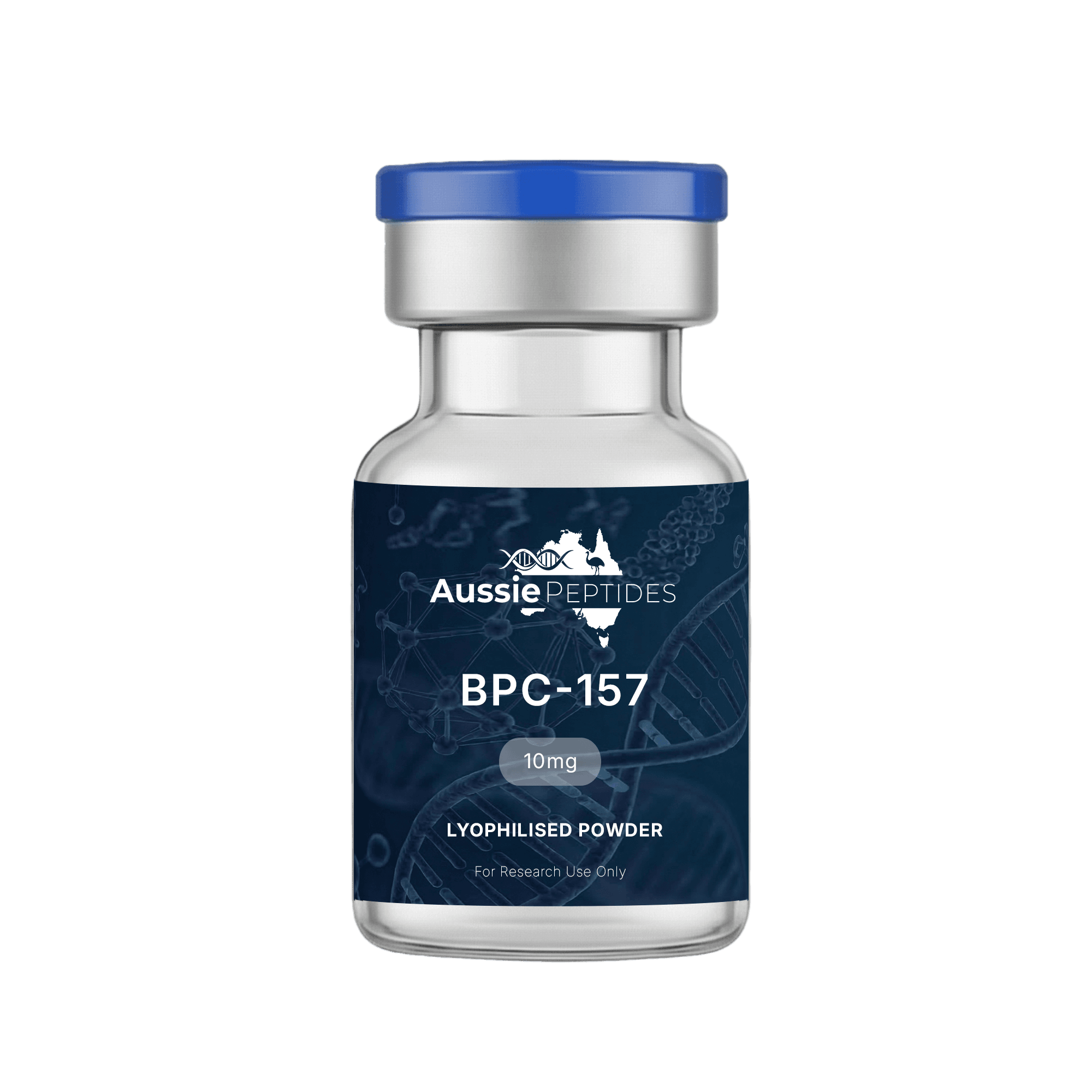
- BPC-157 — relatively stable, but the standard acetic acid reconstitution helps ensure full dissolution. Refrigerate after reconstitution and use within 4 weeks.
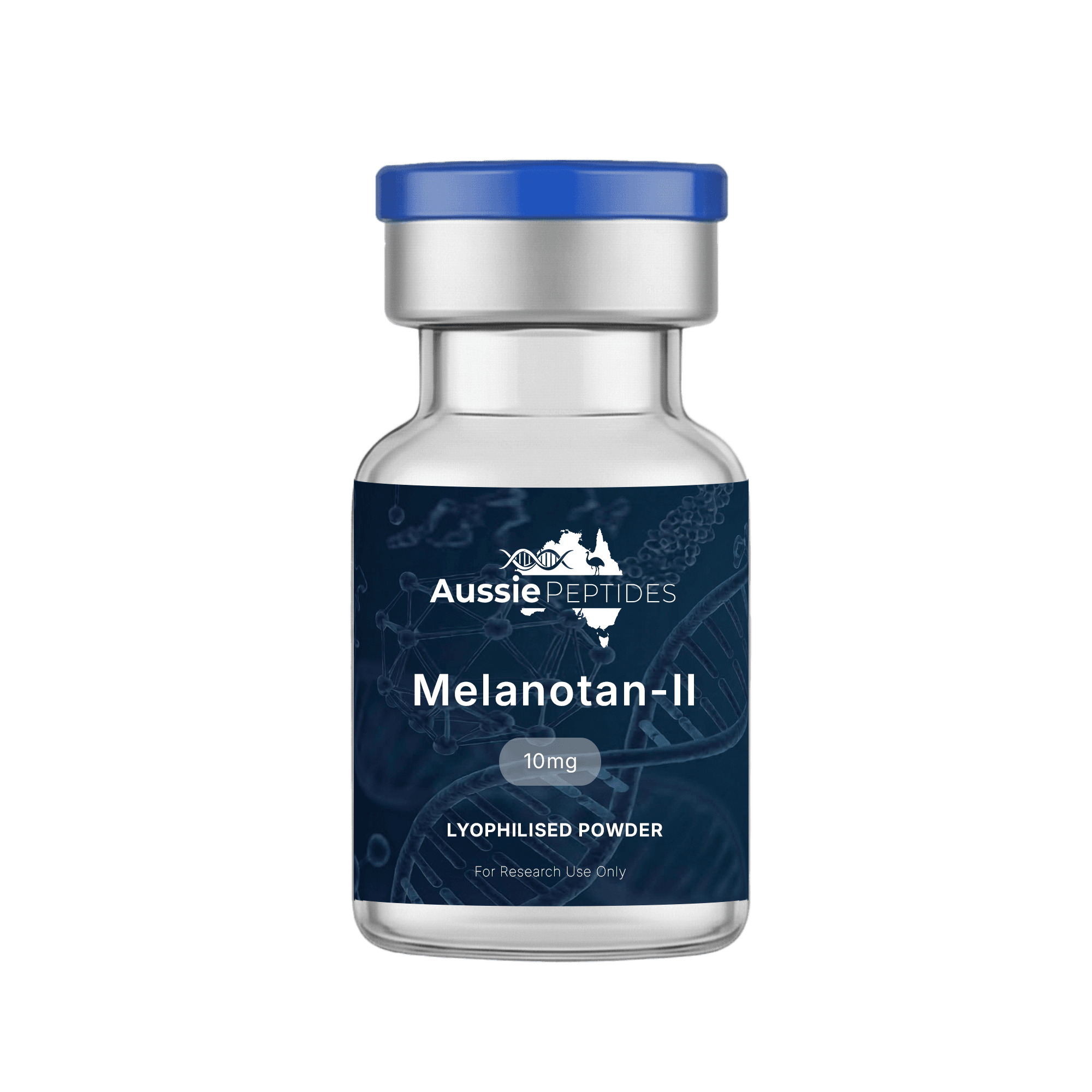
- MT-II (Melanotan II) — stable in lyophilised form. Reconstituted solutions should be kept cold and protected from light.
- Semax — a shorter peptide sequence that is well-suited to BAC water reconstitution. Refrigerate and use within 4–6 weeks.
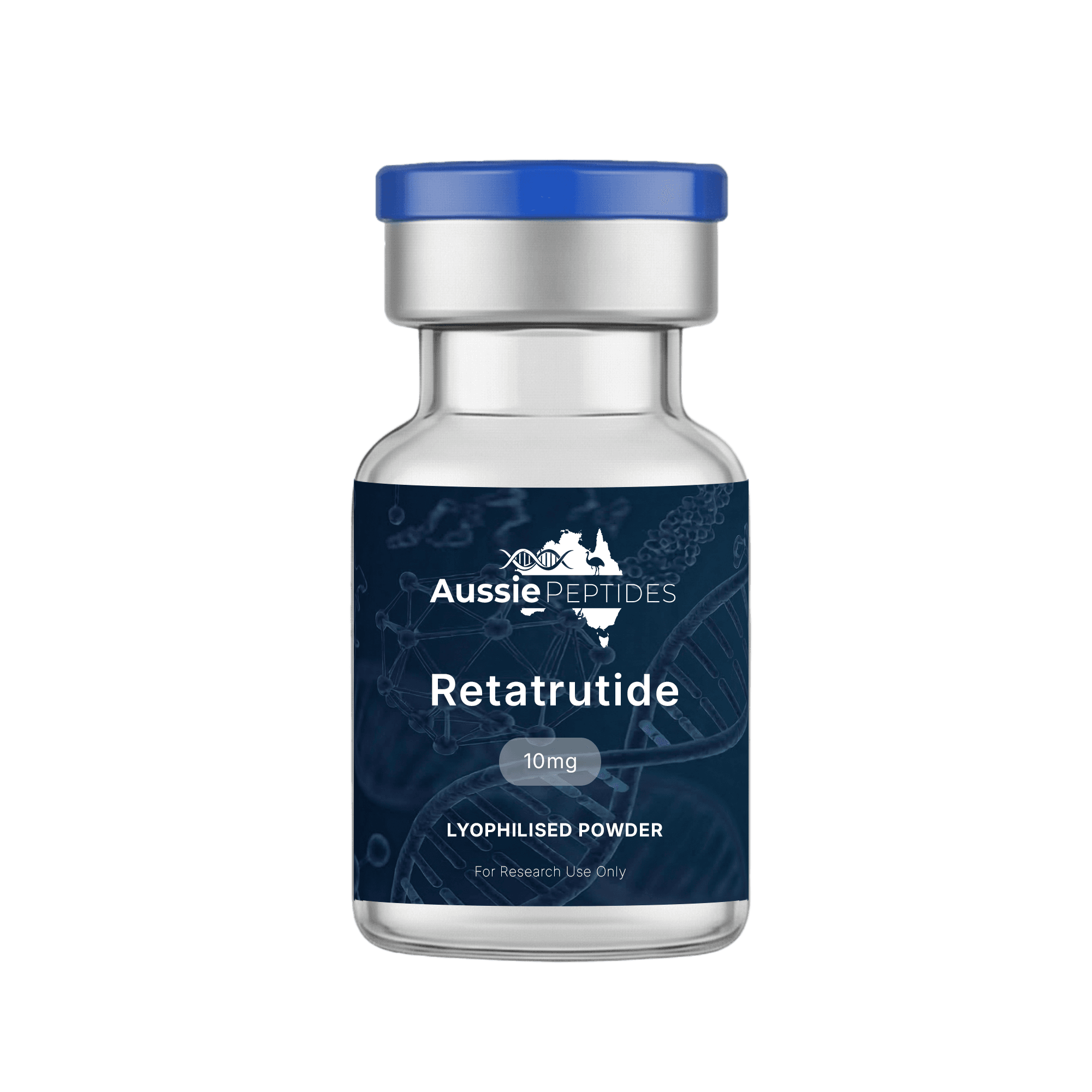
- Retatrutide — a longer 11-residue peptide. Follow standard freezer storage for lyophilised form and refrigerate promptly after reconstitution.
Quick Reference Summary
- Lyophilised, short-term (≤3 months): refrigerator, 2–8°C, sealed, away from light
- Lyophilised, long-term (3+ months): freezer at −20°C, sealed, in a dark container
- Reconstituted in BAC water: refrigerator, 2–8°C, protected from light, use within 4–6 weeks
- Never: shake, vortex, leave at room temperature long-term, freeze a reconstituted solution unless unavoidable
- Always: let frozen vials warm before opening, use a fresh needle for each draw, discard if appearance changes
Storage discipline has a direct impact on data quality. A peptide that has partially degraded doesn't produce clean research outcomes — it produces ambiguous ones. Following these practices ensures the peptide you started with is the peptide you're actually working with.
References
- ICH Q1A(R2) — Stability Testing of New Drug Substances and Products, International Council for Harmonisation (2003)
- Manning et al. — Stability of Protein Pharmaceuticals: An Update, Pharmaceutical Research (2010)
- Wang — Instability, Stabilisation, and Formulation of Liquid Protein Pharmaceuticals, International Journal of Pharmaceutics (1999)
- Cleland et al. — The Development of Stable Protein Formulations: A Close Look at Protein Aggregation, Deamidation and Oxidation, Critical Reviews in Therapeutic Drug Carrier Systems (1993)
- Pikal — Mechanisms of Protein Stabilisation During Freeze-Drying and Storage: The Relative Importance of Thermodynamic Stabilisation and Glassy State Relaxation Dynamics, Drugs and the Pharmaceutical Sciences (2002)
- Chang & Pikal — Mechanisms of Protein Stabilisation in the Solid State, Journal of Pharmaceutical Sciences (2009)
- Carpenter et al. — Overlooking Subvisible Particles in Therapeutic Protein Products: Gaps That May Compromise Product Quality, Journal of Pharmaceutical Sciences (2009)
- Krishnamurthy & Manning — The Stability Factor: Importance in Formulation Development, Current Pharmaceutical Biotechnology (2002)
⚠ All information is for educational and research purposes only. For in-vitro research and laboratory use only. Not for human consumption.